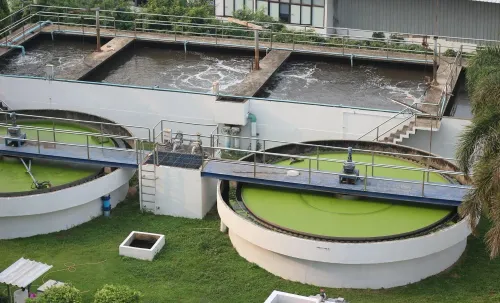

A treatment plant project can fail compliance even when the equipment works if approvals, sampling, waste records, operating controls and renewal dates are unmanaged. By the end, you will know which consultancy services apply to your site, what documents and evidence to expect, and how to compare a consultant’s scope with the work of a designer, operator or laboratory.
Key takeaways
- Start with consent status, site activities, wastewater sources and discharge points.
- Request approval copies, consent conditions, monitoring reports and waste records.
- Match audits and treatment advice to your industry, flows, pollutants and reuse goals.
- Define water reuse targets before selecting treatment processes or equipment.
What happens during the first site assessment and scope review?
The first site assessment establishes the site’s regulatory position before anyone selects an ETP or STP. Environmental management consultancy services in Nagpur begin by checking whether the project needs:
- Consent to Establish from the Maharashtra Pollution Control Board before construction or installation.
- Consent to Operate after commissioning the plant and pollution-control systems.
- Environmental clearance under the EIA Notification, checked against activity, capacity, location and expansion status through PARIVESH.
- Hazardous-waste authorization or other sector-specific permissions.
The consultant then reviews the documents and operating facts that control the assessment:
- Existing consent conditions, validity dates and previous submissions.
- Production capacity, wastewater quantity, effluent characteristics and discharge route.
- Fuel use, air-emission sources, chemical storage and expected sludge or other waste.
- Current treatment-plant drawings, flow-meter records, sampling reports and maintenance logs.
- Proposed changes, including expansion, reuse, bypass arrangements or a new treatment system.
An environmental consultancy in Nagpur should identify consent limits and monitoring duties rather than rely on a nominal flow rate or generic national standard. A consent condition can impose a tighter limit or a specific reporting frequency.
The scope review also fixes responsibility. The consultant interprets obligations, prepares controls and compliance records, and identifies corrective actions. An ETP designer converts approved performance requirements into process and equipment specifications. An operator runs the commissioned plant, while an accredited laboratory samples and tests according to the required method.
Keeping these roles separate prevents a design quotation from being mistaken for ongoing compliance management.
Which approvals, registers and environmental records does the consultant manage?
An environmental compliance consultant in nagpur manages the Maharashtra Pollution Control Board (MPCB) approval trail, not just the application form. Consent to Establish under the Water Act and Air Act is obtained before construction or installation; Consent to Operate follows commissioning. Renewal dates, consent conditions, submission receipts and inspection correspondence stay in one controlled file.
The approval review can include:
- MPCB Consent to Establish, Consent to Operate and renewal applications
- Environmental clearance screening under the EIA Notification, with PARIVESH records where applicable
- Hazardous-waste authorization and records for manifests, storage and disposal
- Legal registers covering the Water Act, Air Act, Environment (Protection) Act, waste rules and site-specific permissions
- Consent-condition registers listing discharge limits, monitoring frequency, permitted quantity, fuel use and validity dates
- Operating records for sampling, flow meters, calibration, preventive maintenance, chemicals, sludge, abnormal events and trained operators
A consent order can impose limits stricter than generic national standards. The register must therefore identify the approved discharge route—surface water, sewer, irrigation land or marine area—and record the order’s pH, BOD, COD and TSS limits.
| Scope | Consultant manages | What it does not establish |
|---|---|---|
| Legal compliance | Approvals, conditions, registers and evidence | ISO certification |
| ISO 14001-style EMS | Aspect-impact register, objectives, controls, audits, corrective action and management review | MPCB approval by itself |
| Sustainability advice | Water-reuse goals, resource tracking and improvement plans | Legal permission to discharge |
An ISO-style EMS strengthens control; it does not replace MPCB consent. Sustainability advice also cannot cure an expired approval or a missed consent condition.
How does a consultant verify compliance at an operating site?
A consultant verifies compliance by matching what leaves the site with the consent conditions, then testing whether the treatment process and records explain that result.
Outlet samples should be compared with permitted limits; samples from influent, critical stages and final effluent reveal a stopped blower, bypass or overloaded unit that one clean final sample can hide.
During a site inspection, the wastewater compliance consultancy checklist should include:
- Sample labels, preservation, laboratory reports, and grab or composite sampling records.
- Equalisation, aeration, clarification and disinfection readings, plus pH, flow and instrument-calibration records.
- Daily operator logbooks, online or manual monitoring records, preventive-maintenance entries, abnormal-event reports and flow-meter totals.
- Chemical-storage inspections covering labels, secondary containment, incompatible chemicals and spill materials.
- Hazardous-waste manifests for ETP sludge, spent carbon, used oil, contaminated containers and other classified residues.
- Sludge-disposal evidence showing quantity, transporter, authorised facility, dates and receipts.
The consultant then audits gaps against each Maharashtra Pollution Control Board consent condition, assigns corrective actions, names responsible staff and sets closure dates. Repeated failures require root-cause review, not repeated sampling alone.
Training records must show that operators know start-up, shutdown, bypass prevention, chemical handling and emergency reporting. An environmental compliance consultant in Nagpur should take these findings to management review, where leaders approve resources, track overdue actions and confirm consent-renewal and monitoring obligations.
What do water reuse and treatment-plant consultancy services cover?
A water reuse consultancy services package starts with a measured water balance: source volumes, process consumption, losses, wastewater generation, treated-water demand, reject, evaporation and sludge. The consultant reconciles meter readings with production schedules instead of relying on the plant’s nameplate flow.
Each reuse application is matched to a required water quality. Cooling towers, toilet flushing, gardening, boiler feed and process use have different limits for suspended solids, dissolved salts, hardness, pathogens and oil; using unsuitable treated water causes scaling, corrosion, odour or health risks.
The consultant checks sewage patterns before sizing an STP. Occupancy, kitchen discharge, weekend variation, intermittent flows and infiltration or inflow determine peak flow, equalization volume, biological loading, aeration demand and treated-water storage.
A treatment-plant consultancy scope defines:
- Wastewater characterization and treatability testing when contaminants are uncertain
- Process selection, hydraulic and mass-balance calculations, equipment specifications, civil and electrical interfaces, bill of quantities and automation logic
- Commissioning, operator training, preventive-maintenance requirements and operating records
- Performance testing with stated influent conditions, flow, test duration, sampling method and guaranteed outlet parameters
Reject streams, ETP sludge, spent carbon, used oil and chemical containers need classification, storage, manifests, authorized transport and disposal records. Treating sludge as ordinary waste creates a separate compliance failure.
Wastewater compliance consultancy also establishes a monitoring plan covering raw influent, critical treatment stages, final effluent and receiving water where required. It specifies grab or composite samples, preservation and accredited laboratory testing; one final-outlet sample cannot prove stable compliance for a variable process.
How should you match the consultancy scope to your type of site?
A factory cannot use the same scope as a hotel: its wastewater chemistry, air emissions, hazardous waste and production changes create different compliance risks.
| Site | Priority scope | Common failure |
|---|---|---|
| Factory | MPCB consent limits, ETP performance, emissions, hazardous waste and process records | Designing for nominal flow while ignoring high-strength effluent |
| Commercial building | STP operation, sewage flows, reuse quality, sludge disposal and consent records | Treating low occupancy as proof that the plant is compliant |
| Housing project | Phased occupancy, sewage capacity, environmental clearance screening and handover controls | Commissioning the STP before actual inflow and operator training |
| Hospital | Sewage treatment, disinfectants, biomedical-waste interfaces and infection-control risks | Sending chemical-rich wastewater into an unassessed biological process |
| Hotel | Variable occupancy, kitchen grease, laundry chemicals, reuse and peak flows | Under-sizing equalisation for weekends and events |
| Construction site | CTE status, temporary sanitation, dust and wastewater controls, waste tracking | Operating a temporary discharge without documented permission |
Use this workflow for environmental management consultancy services in Nagpur:
- Screen the activity, capacity and location for MPCB Consent to Establish, Consent to Operate, hazardous-waste authorization and Environmental Clearance through PARIVESH.
- Map flows, pollutants, discharge routes, sludge and records against each consent condition.
- Set operating controls, monitoring duties, calibration dates, training and renewal deadlines.
- Audit evidence, correct failures and retain sampling, manifest and maintenance records.
Environmental consultancy in Nagpur can then separate compliance advice from implementation. S K ENTERPRISES can support ETP or STP selection, installation and commissioning when the approved scope has defined the required flow, treatment targets and operating evidence.
Related product
 | ENVIRONMENTAL MANAGEMENT CONSULTANCY SERVICES An Environmental Management System (EMS) is a structured framework that helps organizations identify, manage, and reduce their environmental impacts. View product → |
Frequently asked questions
What happens during the first site assessment and scope review?
The consultant reviews site activities, water sources, wastewater flows, discharge points, existing treatment equipment, consent conditions and gaps in environmental records before defining the work scope.
Which approvals, registers and environmental records does the consultant manage?
The scope can include consent documents, consent-condition trackers, water and wastewater test reports, waste registers, manifests, monitoring records, inspection responses and renewal documentation.
How does a consultant verify compliance at an operating site?
The consultant compares site operations and monitoring results with consent conditions, inspects treatment systems and sampling points, checks records, and documents corrective actions for identified gaps.
What do water reuse and treatment-plant consultancy services cover?
They cover water balance reviews, wastewater characterisation, reuse objectives, treatment-process evaluation, plant performance checks, sampling plans, operator practices and recommendations for reliable compliance.
How should you match the consultancy scope to your type of site?
Base the scope on your industry, production process, water consumption, wastewater quantity and pollutants, discharge route, existing approvals, treatment capacity and intended reuse.
Keywords